Lasting Impact

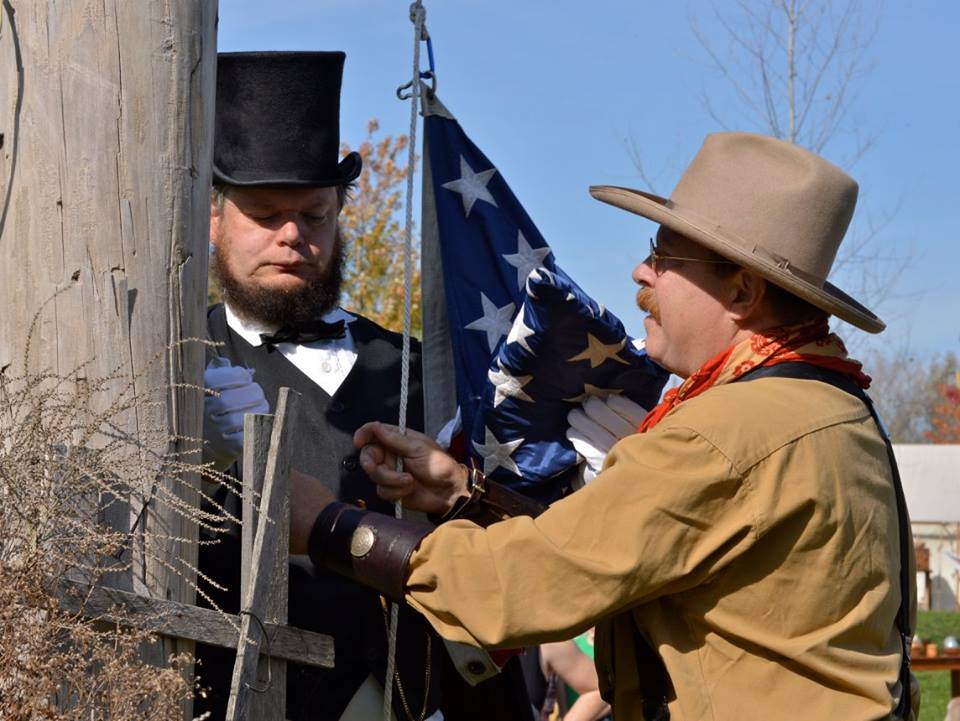
TR and Lincoln. Photo by Mike Huerkamp

TR and Lincoln.
Photo by Mike Huerkamp

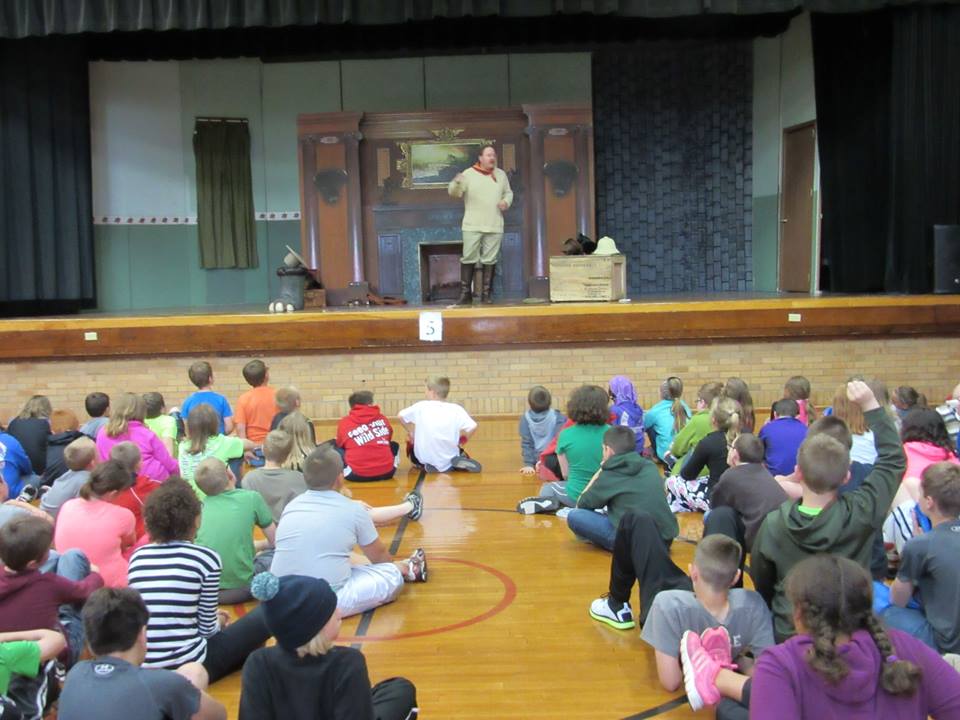
These past few days I had TR camp set up at HistoryFest in Mankato, Minnesota.  This is my 4th year doing so and I really appreciate this event because of its visionary, Jack McGowan.  Jack decided that children who are laughing and playing while also learning will take that more to heart than through a standard history lesson.  This year, he celebrated his 20th year of having history presenters and games at his farm, where local schools bus in 4th graders from across the district and many more across the State.

What is special beyond his vision is his impact.  During the past year, local high school seniors were required to write a paper on something they have done that they felt was highly memorable and special to them.  Twenty five percent of the students wrote their stories on Historyfest.    While that number is impressive, remember this: students in the school district go to the event in 4th grade!  What a testimonial!

We all love great testimonials and thankfully over the years I have been blessed with many from students and teachers.  In reality, Roosevelt is a pretty impressive part of our American heritage and a great role model with fun stories.   But Historyfest proves to me that interactive learning leaves a imprint that lasts longer and creates an impression that children carry with them.  It shows the importance of lessons that include the value of hard work and perseverance that our fathers and forefathers needed to shape our country.  It allows children to find that place that resonates with them so that they can go back to the classroom and research more.  I hope that some students learn that our past leaders may be better measuring sticks for what they will need in the future, as they chose their leaders.

As part of TR Camp, I invite the students into my camp after a talk outside to see inside the tent to understand how the President traveled when he was on Safari or camping.   The tent is full of antiques and TR memorabilia so they have a lot to see!  During this event, I had a young boy who was deep in the back of a class.  When other students went inside, he stayed behind.  I asked him f he was going to look as well.

“I hate history” He told me.

“Those who forget history are condemned to repeat it” I said.

“Yeah, I heard that” he said, arms crossed.

We spoke for several minutes, just he and I.   I started to explain to him the lesson of the lemming: That it is sometimes very good to stand alone from the pack and observe, but to observe the important things – the things that will help you in life.   As we spoke man-to-man his arms slowly lowered, his face turned from grimace to grin.  After his class was exiting he went into the camp and once inside asked great questions just as a new class started to gather and sit on my Safari boxes outside for their starting discussion about TR.

“Thank you Mr. Roosevelt” he smiled as he rushed out to catch-up with his class.


Listening to your audience


A story about conservation

A story about conservation

Fall becomes a very busy time of year for me and it really is a balancing act between my “real job” my “fun job” and my “farm job”.    I decided to check in on an event I was unable to attend and in doing so found some 4th grader blogs I didn’t know existed. Thankfully, these students were required to write about what they experienced and it provided me with some insight on what they actually take away from my 40 minutes with them:

“Our next station was a station about Theodore Roosevelt. It was my favorite station. It was the most interesting station there. We learned a lot about him. The guy who talked about him was dressed up as him. He had cool things laying out on the table. There was his knife, his revolvers, and his horse saddle. It was very interesting. He talked about him having asthma when he was little. He also had a lot more to say.”

~ Max’s 4th grade blog

That was fun! Probably my favorite was the pike station, then Teddy Roosevelt, then pottery, then silver smith, then candle making. I loved going to Big Island Rendezvous!

~ Kjersten’s 4th grade blog

Next we went to see Teddy Roosevelt. When we got there he told us how he grew up and what happened in his life. He told us about his famous bear hunt and how he didn’t want to kill the bear.

~ Jack’s 4th grade blog

Whew!  I have perfected my work a great deal over the years by listening to my audience, finding those stories that truly resonate and of course, adding some funny stories into the mix to make sure they leave with smiles on their faces!   These kind of hands-on events really allow kids to experience history in a special way, and I hope they continue to develop programs like these nationally for kids to truly learn to enjoy our shared American heritage.


Theodore Roosevelt’s lesson on living life to the fullest

Teddy roosevelt on a camel

We often take our time here on Earth for granted.   It’s not uncommon for many of us to procrastinate and push something off until tomorrow, especially if we are given tasks really don’t want to do.

Theodore Roosevelt thrived on getting things done.

I believe Roosevelt was so driven because he was at his core an adventurer.  As a child, his asthma forced him to watch life from his bed, his only respite being the books that his family would give him.  TR would lay still and absorb each chapter as he gasped for valuable air to support his broken body. The books that he enjoyed most were those of adventure; stories about young men exploring great things.  These were things he could not do, but dreamed of doing someday.   Reading those books gave him desire, the most powerful driver for truly getting things done.

His father told him when he was a teenager that if he were to survive, he would need to make his body like he had his mind and TR began to exercise his body as he exorcised his asthma.  By the time he left for Harvard, he had proven to himself that he had the drive to overcome obstacles.  He had worked hard to survive, so he understood better than most of us that life is short and we better attack each day as potentially our last.

He would do so for the full 60 years of his life, “doing hard work at work worth doing”.

As I travel and speak as Roosevelt I continue to contemplate his life lessons and integrate them into my own life.  Recently, a friend accused me of living at such a speed that I was acting like I was about to die.    I am as fit as a bull moose but also realistic that life is short and that we need to make the most of it while we are here.

“The worst of all fears is the fear of living” – Theodore Roosevelt.

Take today and start your own movement to live your life to the fullest.

Theodore Roosevelt and Memorial Day

Speaking to the people

Speaking to the people

Memorial Day was agreed to have started in 1866 Waterloo, N.Y. 
As a veteran of the Spanish-American war, Roosevelt was active 
in memorials to fallen American's, and Memorial day observation 
was no exception.  Here are some highlights from a speech at 
Arlington Cemetery he gave on Memorial Day 1902 while President.  
It is important to remember that the aging 
soldiers he addressed had fought in the Civil War.

"It is a good custom for our country to have certain 
solemn holidays in commemoration of our greatest 
men and of the greatest crises in our history. 

There should be but few such holidays. 
To increase their number is to cheapen them. 
Washington and Lincoln the man who did most to 
found the Union, and the man who did most to 
preserve it stand head and shoulders above all our 
other public men, and have by common consent won 
the right to this preeminence. Among the holidays 
which commemorate the turning points in American 
history, Thanksgiving has a significance peculiarly 
its own. On July 4 we celebrate the birth of the 
nation; on this day, the 30th of May, we call to 
mind the deaths of those who died that the nation 
might live, who wagered all that life holds dear 
for the great prize of death in battle, who poured 
out their blood like water in order that the mighty 
national structure raised by the far-seeing genius 
of Washington, Franklin, Marshall, Hamilton, and 
the other great leaders of the Revolution, great 
framers of the Constitution, should not crumble 
into meaningless ruins.
You whom I address to-day and your comrades 
who wore the blue beside you in the perilous years 
during which strong, sad, patient Lincoln bore the 
crushing load of national leadership, performed the 
one feat the failure to perform which would have 
meant destruction to everything which makes the 
name America a symbol of hope among the nations 
of mankind. You did the greatest and most necessary 
task which has ever fallen to the lot of any 
men on this Western Hemisphere. Nearly three 
centuries have passed since the waters of our coasts 
were first furrowed by the keels of those whose 
children s children were to inherit this fair land. 
Over a century and a half of colonial growth followed 
the settlement; and now for over a century 
and a quarter we have been a nation. 

During our four generations of national life we 
have had to do many tasks, and some of them of 
far-reaching importance; but the only really vital 
task was the one you did, the task of saving the 
Union. There were other crises in which to have 
gone wrong would have meant disaster; but this 
was the one crisis in which to have gone wrong 
would have meant not merely disaster but annihilation. 
For failure at any other point atonement 
could have been made; but had you failed in the 
iron days the loss would have been irreparable, the 
defeat irretrievable. Upon your success depended 
all the future of the people on this continent, and 
much of the future of mankind as a whole. 

You left us a reunited country. You left us the 
right of brotherhood with the men in gray, who 
with such courage, and such devotion for what they 
deemed the right, fought against you. But you 
left us much more even than your achievement, 
for you left us the memory of how it was achieved. 
You, who made good by your valor and patriotism 
the statesmanship of Lincoln and the soldiership of 
Grant, have set as the standards for our efforts in 
the future both the way you did your work in war 
and the way in which, when the war was over, you 
turned again to the work of peace. In war and in 
peace alike your example will stand as the wisest 
of lessons to us and our children and our children's 
children. "

This memorial day, attend your local memorial day remembrance. 
Remember, you will be blessed with spending the day with 
friends and family, an opportunity created through a 
sacrifice by others before you.

They want to know and we need to teach them

10458541_834120079996859_4542934992558702683_n


This past week I had the opportunity to present to hundreds of school children on Roosevelt in Iowa and Nebraska.  While the programs I presented were very different in format and setting, the result was the same – the kids I met were eager to learn.

My Iowa tour was sponsored by many local businesses for the children and adults in Albert City Iowa – a great town with an incredible Library, staff and volunteers who focus on creating cultural events for their community.

The Nebraska event I presented was a outdoor expo, where kids get to try all sorts of activities to get them out into the great outdoors. Events included shooting guns, learning about animals, fishing, camping skills, kayaking  and more.  It was an amazing event and an important one to help increase utilization of parks and the great outdoors.  I was brought into that event thanks to The Nebraska Game and Parks Commission and a grant from Nebraska Humanities.

I presented there with my TR Camp. a reproduction of a Teddy Roosevelt hunting camp.

In camp, kids get to immerse themselves in an 1880’s hunting camp experience to learn about conservation and hunting and it’s importance –  from Roosevelt himself!  They get a idea of what it was like to hunt with a President; what he brings and needs for a hunt and; to see and discuss animal skins he collected and what they are used for.  I have done this camp for many years at history events with a very positive response, so I expanded the camp for 2015 and have been booked for a few outdoor expos.  Like other events of this type, there are “School days” and “Public days”.

On the first day after the kids had gone home, I was organizing my camp when a vehicle pulled up and a gentleman walked to my camp and introduced himself as a local elementary school Principal.   He told me he stopped by the camp to visit because when his kids arrived back from the expo, he asked them to tell him their favorite activity at the expo. He expected shooting a shotgun or archery or another activity, but the majority of the kids told him they enjoyed their time with President Roosevelt.  He just wanted me to know.

I smiled a toothy Roosevelt grin as I shook his hand.

I am not telling you this to impress you, I am telling you to impress upon you what I have learned as I have hone my skills in presenting as Roosevelt: Children crave to know things but they need a reason to want to know.  They like hero’s and people they can relate.

Children relate to Roosevelt because he overcame obstacles that they themselves face everyday.  They want reassurance that even though a single day may be hard, that is just a small bump in the road.  They want to know its alright to ask questions; to go on an adventure; to fail.  They want to be part of something big – a shared place where they can have opportunity.  They want what Roosevelt promised – by contributing their skills, they can be something incredibly special in all the world: they can be an American.


Theodore Roosevelt, an insightful mind

Photo by Caleb Gregory

Photo by Caleb Gregory

As a TR, you need to spend a great deal of time reading.  One of my favorite past-times is reading quotes from Roosevelt.  Since he was a prolific author and letter writer (38 books and over 150,000+ letters while President) he has a lot a researcher can review.   The breadth of Roosevelt’s wisdom covers many areas, and I often marvel at his insights.  Here are a few of my favorites:

“Appraisals are where you get together with your team leader and agree what an outstanding member of the team you are, how much your contribution has been valued, what massive potential you have and, in recognition of all this, would you mind having your salary halved”.  

“The things that will destroy America are prosperity-at-any-price, peace-at-any-price, safety-first instead of duty-first, the love of soft living, and the get-rich-quick theory of life”.

“If there is not the war, you don’t get the great general; if there is not a great occasion, you don’t get a great statesman; if Lincoln had lived in a time of peace, no one would have known his name”

It is written that Roosevelt could speak to just about anyone and find a common ground, but that his ability to converse with the best minds of the world on complex topics was extraordinary.  Because he was so well read, but more importantly, curious, Roosevelt was able to connect, learn and find value in almost any conversation.   It is something I wish I could do as well.


Questions and Answers – The fun of presenting to live audiences

Teddy Roosevelt presents at The Kaleidoscope Factory

Teddy Roosevelt presents at The Kaleidoscope Factory

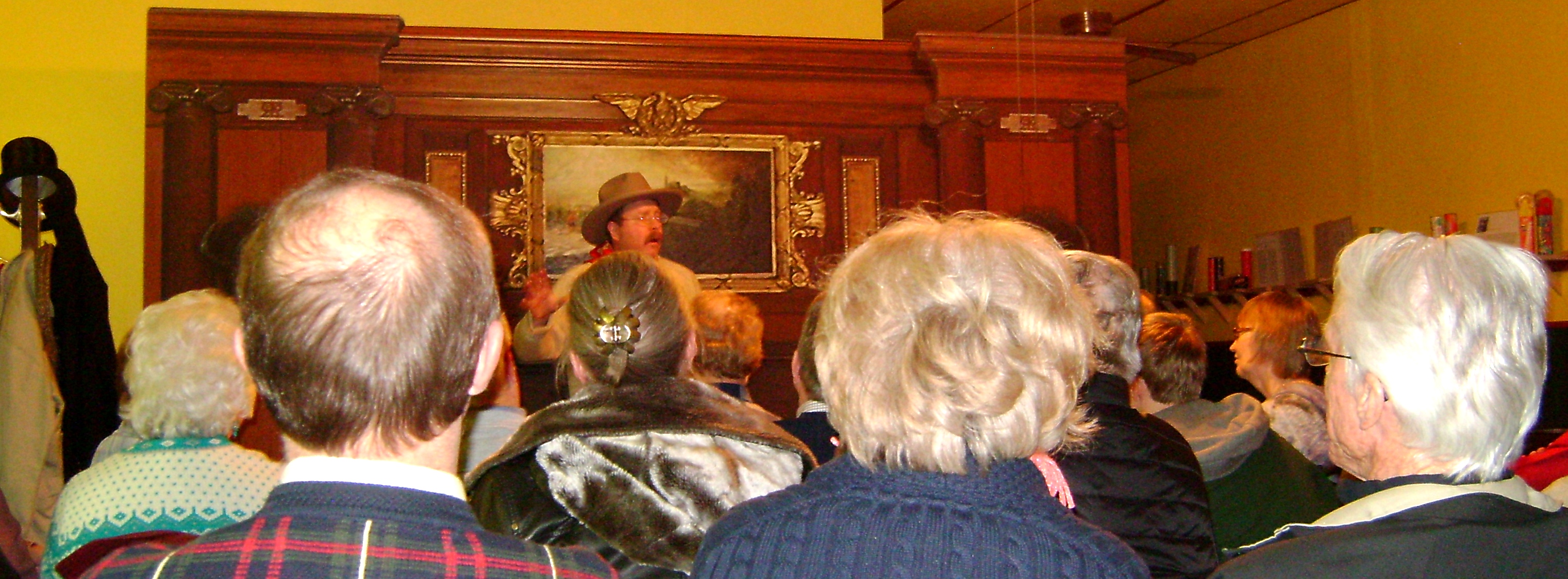
Often after a presentation as Theodore Roosevelt, I open the floor to questions.  Events that hire me often comment about the fact that people ask me questions by starting with “Mr. President”.  They are also intrigued by the fact that after all these years of study, I can field almost any question an audience asks.

Recently, I did an event at a history center where people were asked to show up with “stump the President” questions.  They told me about it when I arrived I was very concerned about what they might ask.  Most of them were much easier questions than the ones I was given back when I competed in contests.

The “doozey” questions still come up from time to time and I enjoy searching through my memory bank or doing research for the answer when they can stump me.  Some questions are rather subjective, and I have to literally take off my “Roosevelt hat” and answer as myself.  I thought you might be interested in some more recent questions – the answer I gave and the research I did after with the most common answer.

“When you shot an elephant on Safari – what gun and caliber did you use?”  The answer I gave: “Winchester .405 I believe, but my memory is not perfect so don’t quote me!”  Correct answer: Some experts say it was the Winchester .405 but others say it was the Holland 500-450.  My gut tells me that the Holland would have been a better choice and was probably what he used.

“What is your IQ?” The answer I gave: “Enough to get by. I am not the smartest man but I read a book a day so at least I can feel that way”  Correct answer:  Current estimates place Roosevelt’s IQ at 146.5

“How would you life have been different if your first wife had not died?”  I had to remove my hat for this one.  “We all have points in our lives where there is a “fork in the road” and we must choose our path.  Roosevelt said “I would have never become President if it were not for my time in the Dakotas”, which happened because his wife passed away and he went west to regroup himself.  From his perspective, our nation would have never benefited from his perspective on building a better country if his wife had not died  (maybe).  Correct answer: unanswerable.

“Who was the man with the shot off finger?” I still have yet to figure out this question and who the man is.  (I would appreciate any insights anyone has on this one).

The question and answer period is a great chance to connect further and have people get to the questions they wished they could ask Roosevelt.  I relate it to the idea “If you could sit down for a beer with someone from history, who would it be?”.  I can’t replace the real Roosevelt in that dream, but at least I can be a reasonable facsimilie.  (Unlike Roosevelt, I would actually drink the beer!)


TR and the power of Character

Speaking Theodore Roosevelt 1907

“The division between the worthy and the unworthy citizen must be drawn on conduct and character and not on wealth or poverty.”

Roosevelt was raised by a father who stressed that wealth provided opportunity to help others but the quality of your character was the reason to do so.  In college, “Teddy” met many people of privilege who were living off of family trusts with no desire to do anything but relax once out of college – and he loathed them.  Later, he would meet poor but able people who chose not to subscribe to hard work and he felt the same about them.  What he determined is what his father had preached: that character drives the success of a person, and success was not money, but contribution to society.

TR believed in the Strenuous life, a life of toil and work worth doing.   To him,  character was the ultimate measure of a person and he considered his own demonstration of it to others as his hallmark.  There were many people who politically he disagreed, but considered close friends because of their commitment to others and society as a whole.  Many of his actions went against the Republican party of the time, because he believed strongly that decisions were not just to appease the country for that moment, but to build a country for “your children and your children’s children”.


Theodore Roosevelt on Lincoln

The White House

The White House

Theodore Roosevelt considered Abraham Lincoln to have been one of the greatest leaders of the United States and many of his insights into leadership were formed from his reading about the 16th President.

In  a letter from his office, Roosevelt wrote:

“I am mighty glad you like what I have been doing in the governmental field.  I do not have to tell you that my great hero is Abraham Lincoln, and I have wanted while President to be the representative of the “plain people” in the sense that he was – not, of course, with the genius and power that he was, but according to my lights, along the same lines.”  – White House, June 13, 1906

To understand his perspective it is helpful to understand the Roosevelt family connection to Lincoln.  “Teddy’s” father, Theodore Roosevelt, Sr. was a “Lincoln Republican” and during the war between the States, he and two friends, William Earl Dodge, Jr. and Theodore B. Bronson, drew up an Allotment System, which amounted to a soldier’s payroll deduction program to support families back home. He then went to Washington, lobbied for, and won acceptance of this system, with the help of Abraham Lincoln himself.  Theodore Sr. and Mr. Dodge were appointed Allotment Commissioners from NY State. At their own expense, the two men toured all NY divisions of the Army of the Potomac in the field to explain this program and sign interested men up, with a significant degree of success. Over $1 million dollars was sent home from soldiers because of this program.

There was a sort of “mini” civil war in the Roosevelt home during the same time.  “Teddy’s” mother Mittie was raised in Georgia at a plantation where her family owned slaves.  Mittie had a personal slave companion growing up who slept at the foot of her bed.  Her brothers fought for the confederates and because of this, she requested that her husband did not joint the Union army.  Roosevelt’s father was wealthy and as it was custom of the day, paid for someone else to fight in his place to appease his wife’s wishes.   Roosevelt, Sr.  was well known by the Lincoln’s and was a favorite escort of Mrs. Lincoln when he was in Washington.

There is no actual account of young Teddy meeting President Lincoln and I believe that if he had met him, he would have spoken about it at some point is his life, given his reverence for the man.    There is a photo that many claim is  young Theodore watching from a window as the funeral procession moves past his grandfather’s home, the claim being a photo of the two Presidents together: TR and Lincoln.

Roosevelt referenced Lincoln many times in his famous speeches and the hero’s of the battlefield for both sides of the war.  Roosevelt’s comment on leadership however gives us a good insight into his perception of how a leader is made and why we regard Lincoln in high esteem.

“If there is not the war, you don’t get the great general; if there is not a great occasion, you don’t get a great statesman; if Lincoln had lived in a time of peace, no one would have known his name.”


Heavenly Iowa and yet another life lesson

Roosevelt! the play

Roosevelt! the play

I was fortunate to premier Roosevelt! at the Donna Reed Theater in Denison, Iowa this past week.  I gave two performances there – one with almost 350 fourth and fifth graders who learned about their 26th President and many of his adventures.  They were so well behaved that both Mrs. Roosevelt and I couldn’t believe it.  I was told afterwards that usually these children are fidgeting in their seats, but that they were so engaged in the stories that they didn’t move a muscle!  We did an evening performance as well, which went great with much discussion in the hallway after.

I also performed at The Kaleidoscope Factory in Pocahontas, Iowa the following day to a fun crowd.

Many years ago I read a book entitled “Blue Highways” by William Least Heatmoon about traveling the back roads of America.  After a very scary near-death experience on the Interstate, I have for almost 3 decades preferred the road less traveled.  My beautiful wife is great at hunting out places to see when we drive the unbeaten path and one such trip she found a factory that made Kaleidoscopes.  It was in a very small town and when we stopped we ended up spending several hours with the owner.  When he asked what I did, I told him I was just starting to portray Theodore Roosevelt and he offered at that moment to “Hire me someday”.  Five years later I received an email from him saying he was ready – if I was.  He had moved to a larger town, and was converting his shop  – when he could – a few evenings a month into a specialty live entertainment venue for performances.

When we arrived there was sawdust on the floors and tables set up for manufacturing!  Within a few hours, we had converted the whole place to a small theater complete with seating and a stage.

Life lesson From Roosevelt “Do what you can, with what you have, where you are”

Life Lesson from Leonard: “I just do what I can, with what I have, where I am”

Please take a moment to learn about this amazing man by visiting him at http://www.kaleidoscopefactory.com/ and like him on Facebook at The Kaleidoscope Factory.    I highly recommend one of his handmade scopes – they are a great way spend a few minutes of enjoyment each week without the need for batteries! (Had mine for over 5 years so I know!)